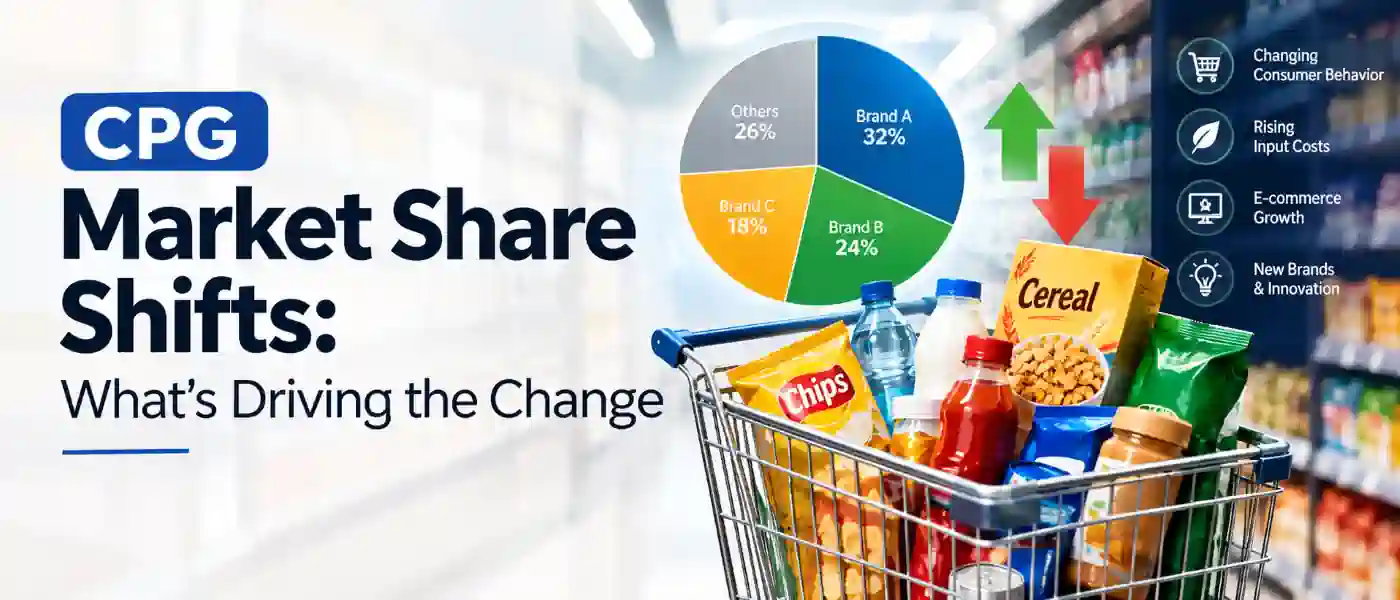
The world of consumer packaged goods never stands still. A brand that dominated a category just five years ago can lose significant ground in one retail cycle if it stops listening. To understand CPG market share shifts, you have to look beyond the sales charts, and try to understand why shoppers are switching, staying loyal, or trying something new.
Why Market Share Keeps Moving in CPG
Consumer packaged goods (CPGs) thrive or suffer from repeat sales. People re-purchase the same things for their oral hygiene, such as toothpaste, along with snack foods and cleaning products, which stability sounds like until you factor in how easily consumers can swap one brand for another on a whim. With an easy switch to another brand, a little disruption, a price increase, a supply hole, a viral review can move market share quickly.
That steady churn is exactly why CPG companies spend so much time tracking consumers rather than assuming loyalty will stick — and it’s a major driver behind the ongoing CPG market share shifts across nearly every category.
Private Label Brands Are Closing the Gap
Among the most unmistakable changes in recent years is the growth of store brands. Retailers have learned to pack their own-label products with the same visual and tactile punch as premium products, rather than simply relying on the economy backup tier. Better formulas, fancier packaging and smarter placement on the shelf have all contributed.
Consumers who previously considered private label a fallback now select it intentionally, particularly in areas such as snacks, personal care and home essentials where the quality divide has largely narrowed. That shift takes share straight from traditional national brands that were once the dominant force in those aisles, with little competition.
E-Commerce Changed Who Gets Discovered
Online shopping didn’t simply add a new sales channel; it rewrote how products are discovered in the first place. Now a small brand with a strong online presence can reach shoppers a larger competitor never would have through traditional retail alone.
Search visibility, reviews, and social proof are just as important as shelf space was 10 years ago. Brands that cracked digital discovery early gained share at the expense of competitors that have been waiting for in-store placement to do all of their work — another clear example of how CPG market share shifts are being shaped by channel, not just product quality.
Direct-to-Consumer Pressure
For newer brands, the ability to sell directly to consumers, without a retailer taking a cut, helps them build loyalty and pricing authority that older players can often struggle to match through wholesale relationships. Even brands that continue to sell through retail have begun establishing their own direct channels in order to retain that data and relationship in-house.
Sustainability Preferences Are Reshaping Loyalty
Environmental concerns have shifted from niche topic to an actual purchase driver for a sizable share of consumers, especially younger ones. Recyclable packaging, less plastic and truthful labeling are now swaying buying decisions once only influenced by price and quality.
Brands for which sustainability is a true part of their DNA, and not simply a marketing soundbite, tend to see stronger loyalty down the line. Brands that are caught making ambiguous or misleading claims seem to lose trust very quickly, and trust is difficult to regain in a crowded category.
Packaging Is Doing More Competitive Work Than Ever
Packaging was mostly functional — protect the product, say what’s inside, look nice on a shelf. That’s changed. Now packaging tells you about the quality, values and personality of the brand, and in many cases is the first (and only) time a shopper engages with a brand before deciding to buy. Clear signals about claims such as “plant-based,” “gluten-free” or “recyclable” also give shoppers a quick way to narrow down options without having to read a full ingredient list. Brands that provide that information up front are the ones that tend to win those split-second decisions you make in a crowded aisle, or a scrolling feed.
Generational Buying Habits Are Splitting the Market
Various age segments are not only shopping differently; they are also focused on different aspects when comparing products. Brand values, sustainability and social proof are more heavily weighed by younger shoppers, while older generations tend to rely more on trust established and consistency.
That divide is forcing CPGs to cease the “one audience, one preference set” thinking. A single product line now may require several messaging strategies if it is to maintain market share across age groups, notes Hopkins.
Technology Is Speeding Up Every Decision
AI and data analysis have transformed the speed at which companies can respond to changing demand. Rather than relying on quarterly reports, brands can monitor purchasing trends, modify inventory, and identify nascent trends in near real time.
This shows up in a few practical ways:
● Faster demand forecasting that reduces stockouts and overproduction
● Smarter inventory management across retail and online channels
● Supply chain adjustments made before disruptions turn into shortages
● Personalized marketing that reaches the right shopper with the right message
The companies that were the first to adopt these tools have a headstart just because they can react to changing customer behavior more quickly than those who are still using older, slower data loops.
Supply Chain Stability Has Become a Competitive Advantage
The last few years have taught us that a great product is useless if it’s not available when a customer wants to buy it. Brands that diversified their supply chain and improved logistics kept customers even when competitors struggled with out-of-stock situations.
This reliability creates silent loyalty. People don’t always realize that a product is always available, but they absolutely notice when a favorite item is out of stock and they have to buy an alternative, sometimes permanently.
Food and Beverage Remains the Biggest Battleground
Among CPG categories, food and beverage continues to experience the most competitive movement over the past four years. It’s a category people shop in all the time, so even the tiniest changes in taste or pricing can cause big ripples across market share numbers — making it a bellwether category for tracking CPG market share shifts overall.
Soaring prices of ingredients and supply constraints have forced firms to be more tactical about where they compete — occasionally paring down product lines to focus resources on the products currently generating the most consumer loyalty.
What This Means for Brands Going Forward
“There isn’t one move that locks you in market share anymore. You need a mix: packaging that clearly signals value, pricing that stands up against private label, supply chains that don’t collapse under stress, and a sustainability story that actually holds water.”
The brands making headway right now aren’t always household names. They’re watching closely how shoppers are really making decisions — and pivoting before the competition does, staying ahead of the next round of CPG market share shifts.