Packaging is always a compromise: protect the product, keep costs reasonable, and don’t use more material than you must. For decades that compromise was achieved through trial and error, gut instinct, and a lot of physical testing. But increasingly, a handful of manufacturers are entrusting some of that work to artificial intelligence — and the results are shifting how packaging is designed, produced and shipped.
Here’s a closer look at what AI to optimize packaging actually looks like in practice, and why sustainability is at the center of so much of this shift.
Why Packaging Companies Are Turning to AI
The packaging industry has been squeezed from several sides: consumers who want materials to be environmentally friendly, retailers who want faster turnaround times, and increasing costs for raw materials such as paperboard and plastics. Delivering on all three simultaneously is legitimately challenging using traditional design and manufacturing methods alone.
AI fills this gap by analyzing orders of magnitude more production data than a group of humans could manually examine. It identifies patterns in machine operation, material behavior, and even where waste might subtly enter the system, and then translates those patterns into actionable decisions for companies.
Smarter Package Design From the Start
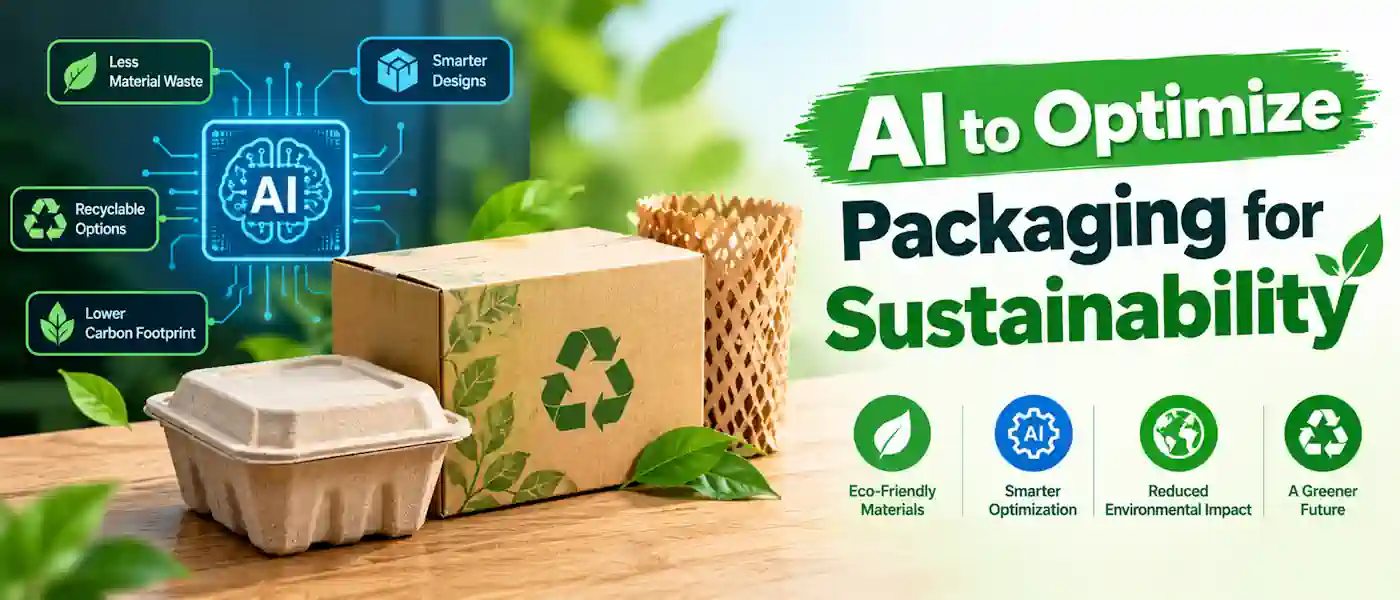
One of the most tangible applications of AI is in the design itself. AI-guided tools can run hundreds of material combinations to predict how a package will perform under various conditions, saving engineers from having to run dozens of manual tests, all without building a single prototype.
This lets companies:
- Test structural strength and durability digitally, cutting down on physical prototyping
- Identify the minimum amount of material needed to still protect the product properly
- Compare multiple design variations quickly instead of one at a time
- Catch design flaws early, before they turn into costly production errors
This often results in packaging that uses less material while providing the same amount of protection that the product truly requires, which is a win for the company’s bottom line and a win in terms of keeping waste out of landfills.
Cutting Material Waste Without Cutting Corners
The clearest sustainability win that AI brings to the table is lightweighting (the reduction of packaging material without compromising performance). When a system can recommend a design that uses significantly less material, but still passes strength and protection tests, that is a straight drop in raw material use, shipping weight, and cost.
Lighter packaging has other benefits as well. Lower weight per shipment results in less fuel being consumed during transit, which helps to support the emissions reduction commitments that many companies are now required to closely track.
Better Quality Control on the Production Line
AI-driven inspection systems are changing the nature of quality control on packaging lines.These systems can perform scans for:
- Printing errors and misaligned graphics
- Damaged or inconsistent materials
- Sealing problems that could compromise the package
Identifying these problems as they happen, rather than once a batch has been shipped, prevents a lot of waste and customer returns. It also means fewer packages with visible defects ending up in the hands of customers, which is as important for brand reputation as it is for sustainability.
Predictive Maintenance Keeps Lines Running Efficiently
When equipment goes down unexpectedly it’s not only a productivity pain, it’s a sustainability pain. A machine that breaks down during a run often results in wasted materials and energy. AI-enabled monitoring systems continuously monitor equipment performance and alert for minor issues before they can develop into major breakdowns.
This type of predictive maintenance allows plants to schedule repairs in advance rather than wait for breakdowns, keeping production more consistent and reducing waste of material associated with emergency shutdowns.
Supply Chain and Inventory Optimization
Producers of packaging rely on a continuous, consistent flow of materials such as paperboard, adhesives, inks and plastics. AI can even play a part here, increasing accuracy in demand forecasting and inventory planning.
More accurate forecasting means:
- Less overstocking of materials that may go unused or expire
- Fewer emergency orders that come with higher costs and rushed shipping
- Better use of warehouse space
- Reduced emissions tied to unnecessary transportation runs
None of this is flashy, but it adds up. Minor inefficiencies throughout a supply line compound quickly, and AI’s ability to optimize planning has a real impact on cost and environmental footprint.
Supporting Custom and On-Demand Packaging
Brands increasingly desire packaging that is product specific, seasonally themed, or for limited runs, and that level of customization used to mean long lead times and higher costs. AI tools enable producers to analyze design alternatives and calculate production costs at a much faster pace, which allows them to provide custom packaging options without a significant compromise in efficiency.
This also has implications for sustainability, since more rapid and precise costing reduces the trial-and-error waste that so often accompanies small batch runs of custom production.
AI Supports Workers, It Doesn’t Replace Them
Something to be clear about here: the application of AI to packaging is not about reducing headcount. Engineers, machine operators, designers, and quality experts are still needed in the process. The difference is the data they can now get, and how many repetitive jobs are being taken away with automation.
Multiple packaging firms are making active investments in training programs to educate workers on how to engage with AI-driven solutions, interpret production data and operate automated machinery. That: Skilled individuals working with improved tools, generally leads to better results than either one by themselves.
Where This Is Headed
The use of AI in packaging is growing beyond the realm of large manufacturers. As software becomes cheaper and more straightforward to adopt, small and mid-sized companies are beginning to implement these tools on their own operations, meaning that the benefits (less waste, better quality control, smarter material use) are starting to be felt across more of the industry.
The sustainability challenges won’t disappear, and the need for packaging that ships more quickly and costs less to make sure won’t either. AI to optimize packaging provides a concrete way companies can pursue all of those goals in concert, not by replacing the people who design and build packaging, but by giving those people sharper tools with which to work. As the technology advances, anticipate the divide between organizations that are effectively leveraging the technology and those that are still relying solely on manual methods to continue to widen.