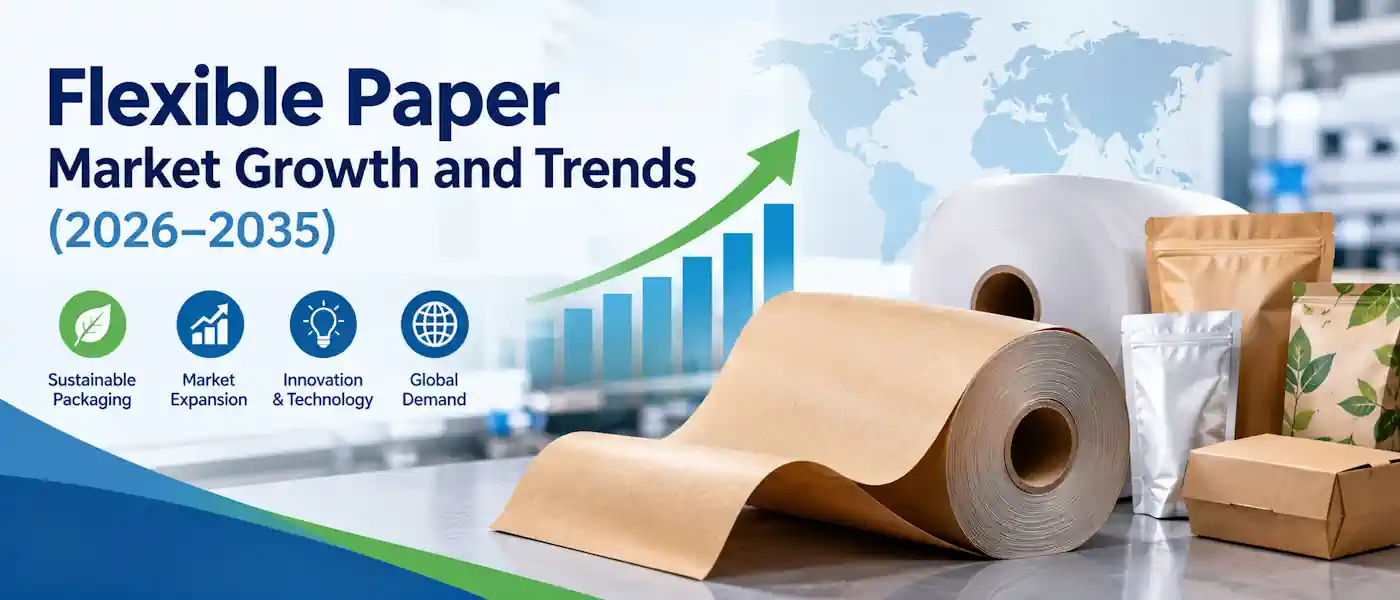
Quietly, packaging is undergoing one of its largest transformations in decades, and paper is right at the heart of it. The market growth story for flexible paper tells you why brands that used to grab plastic film automatically are reconsidering their options. With increasing consumer pressure, more stringent regulations and real improvements in coating technology, paper-based flexible packaging is no longer a niche alternative. It’s becoming the default in categories which really never thought about it previously said Aveyard.
Why This Market Is Expanding So Quickly
The basic driver is simple: people want packaging that doesn’t linger in landfills for hundreds of years. Paper is also said to degrade more quickly, be more seamlessly recycled in most municipal systems, and has a “sustainable” halo that plastic just can’t muster nowadays, fairly or not.
That perception is backed by real momentum. Governments in a number of regions have introduced bans on single use plastics, and brands in the food, personal care and pet product space are feeling huge pressure (from retailers, regulators and their own customers) to ditch plastic film wherever they possibly can.
The Push From Regulation
Legislation around plastic and for the responsibility of producers is making manufacturers do, not just say, sustainability. And when a nation bans certain types of plastic outright, paper is frequently the most feasible alternative already available.
The Pull From Consumers
On the flip side, consumers are increasingly gravitating towards brands with paper or cardboard packaging when given the choice, particularly in the confectionery, snack and personal hygiene segments. That consumer behaviour gives retailers and manufacturers a commercial driver to change, not just a regulatory one.
What Sets Flexible Paper Packaging Apart
Flexible paper packaging performs the same functions as plastic film, it protects the product, maintains moisture and prevents contamination, however, it is derived from renewable, fossil-free fiber source instead of petroleum. Most grades remain lightweight (typically less than 100 g/m2), and modern grades do not include the silicone and glassine layers which reduced recyclability.This section is more relevant in:
- Confectionery and chocolate wrapping
- Pet food pouches
- Ready meals and food service items
- Personal hygiene and home care products
The fiber base is flexible enough (literally) to be molded into bags, pouches, wraps, and roll stock, which is precisely why it can be used across so many more types of products than just one or two products like plastic.
Key Growth Drivers Shaping the Market
A small number of forces are responsible for most of the heavy lifting:
- Growing demand for packaging that’s genuinely eco-friendly, not just marketed that way
- Stricter government limits on plastic packaging formats
- Better cost efficiency and shelf-life performance as coating technology improves
- Rising capital investment from manufacturers building out sustainable material capacity
None of these are short-lived fads. These are shifts in the underlying processes by which packaging is produced and regulated, and that’s why the growth curve for the flexible paper market is more of a steady rise than a series of peaks and troughs.
The E-Commerce Effect
Online retail continually boosts the packaging industry overall, and that growth drags flexible paper with it. Lightweight, low-volume packaging is more important when shipping costs are directly linked to weight and size, and paper-based formats tend to compress and ship more efficiently than more voluminous options.
Regional Patterns Worth Watching
“Not all regions are seeing the pace uplift, and this matters for anyone watching where demand is really going.”
North America
Let me set the scene for you: Stringent environmental legislation coupled with relatively well-developed recycling infrastructure in the region North America is the dominant holder of the market share. There’s also more retailer pressure on brands here to meet sustainability targets, which means demand isn’t going away.
Asia Pacific
The Asia Pacific is the fastest-growing region, due to rapid urbanization, increasing household incomes, and the fact that the food and beverage sector is growing almost everywhere at the same time. The concentration of manufacturing capacity in this region also provides a production advantage in addition to the demand growth.
Europe and Beyond
Europe is still leading in sustainable packaging via policy, so demand there stays steady even lacking the same population growth as in Asia Pacific. Latin America and MEA remain smaller markets today, but are seeing increasing contributions year-on-year as global brands align packaging standards across their supply chains.
Where Innovation Is Headed Next
A few developments are likely to characterize the next phase of expansion:
- Water-based and bio-based barrier coatings that improve moisture resistance without hurting recyclability
- Digital printing that makes short-run, highly customized packaging affordable
- Smart packaging features like QR codes for traceability and consumer engagement
- AI-driven demand forecasting and supply chain planning, which is helping manufacturers cut waste and plan production more accurately
Technology’s Growing Role
In particular, AI is beginning to change how manufacturers work on a day-to-day basis, from forecasting seasonal demand spikes to automating sections of the production line that used to require significant manual labor. It’s not sexy, but it’s silently adding to margins and eliminating mistakes throughout the supply chain.
Real Challenges the Industry Still Faces
Growth doesn’t imply a smooth path. A couple of barriers are worth taking seriously:
- Recycling infrastructure is still uneven, and some regions simply can’t process paper packaging at scale yet
- Paper fiber loses strength each time it’s recycled, which limits how many times it can be reused
- Barrier coatings that improve performance often make recycling harder, creating a real trade-off
- Concerns about deforestation and its impact on biodiversity haven’t gone away, even with more sustainable sourcing practices
The carbon footprint of paper manufacturing is also a fact of life, and that’s a nuance that brands focused on sustainability can’t afford to overlook simply because the final product feels greener than plastic.
The Road Ahead
The general direction is difficult to be unseen. With plastic legislation becoming more stringent, coating technology advancing and e-commerce expanding, flexible paper packaging is expected to make further inroads in food, personal care and retail applications. The brands that are ahead of the pack, that have invested early in better materials and smarter production, are also the ones who are about to be best positioned, not worst, in this rapidly evolving market.
Paper packaging is not going to replace plastic everywhere, and it probably never will. But one category after another, it’s becoming the sensible, believable alternative, and that is what is really driving the numbers in this market.