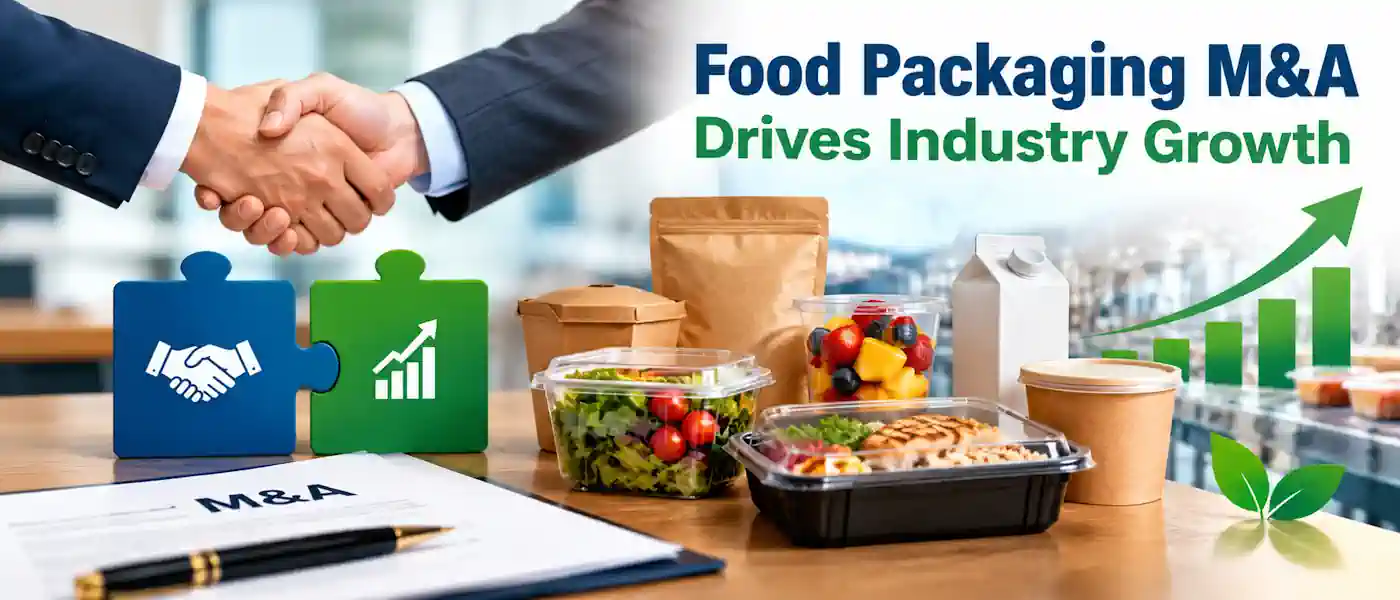
Mergers and acquisitions in the world of food packaging have clearly accelerated, and it’s not just about companies vying to get bigger for the sake of it. Buyers and sellers are motivated by specific, practical needs: sustainable materials, more localized supply chains, and technology solutions that would require years of development time. Knowing what’s driving food packaging M&A activity right now tells a lot about where the entire sector is headed.
Consolidation Isn’t Just About Growth Anymore
Mergers and acquisitions in this space used to be about scale — buy a competitor, take their customers, increase revenue. That’s still part of it, but it’s not the whole story.
Today food brands are pushing suppliers to deliver more sustainable materials, improved recyclability, and packaging that can withstand cold shipping and long shelf life. To meet those demands, they often need capabilities they don’t have in-house. Instead of investing the time and money to build that expertise over years, many packaging companies are buying companies that already possess it – whether it be specialized machinery, proprietary materials or an R&D group.
Sustainability Is a Major Deal Driver
Sustainability demand is influencing food packaging M&A like few other factors.Food firms are looking for packaging that preserves freshness but doesn’t pile up in landfills, and that’s led buyers to companies with genuine know-how in:
- Recyclable paperboard
- Fiber-based and compostable materials
- Lightweight container design
- Reduced-plastic packaging solutions
Good sustainable materials expertise makes a company a genuinely attractive acquisition target, sometimes more valuable for that know-how alone than for its existing customers. Expect this trend to continue fueling deal activity as environmental regulations become more stringent and consumer pressure mounts.
Technology and Automation Are Reshaping Who Gets Acquired
The manufacture of contemporary food packaging is more reliant on automated quality control, digital printing and intelligent manufacturing systems that can detect defects or make adjustments to the process in real-time. Building that type of infrastructure from the ground up is costly and time-consuming.
Buying a company that already has advanced automation in place is often the quicker, more cost-effective way to modernize. It is one of the cleaner trends in recent food packaging M&A: buyers seeking technically strong businesses, not simply those with bigger production footprints.
Supply Chain Resilience Has Become a Priority
The past few years laid bare the vulnerability of single-site production when disruptions occur. That lesson has stuck, and is now a real acquisition strategy factor.
By acquiring facilities in different regions, companies can:
- Shorten delivery times to major customers
- Reduce dependence on any one production site
- Build redundancy into their manufacturing network
- Respond faster when a single facility faces a disruption
Such geographic diversification was once a matter of luxury. That’s more of a necessity than a nice-to-have kind of thing for suppliers to national or global food brands.
Why Investors Still See Food Packaging as a Safe Bet
Food packaging wears differently than many other consumer facing industries. Demand doesn’t fluctuate wildly with trends or seasons as it perhaps could in other industries, because every food product, no matter what category, needs a dependable packaging solution to get it to the shelf safely.
That steadiness is precisely what makes the industry attractive for long term investment. Investors perceive food packaging as a safe store of value, which is part of why the pace of deal activity has remained robust even as activity in some other markets has cooled.
Scaling Into New Markets Through Acquisition
M&A is also a quick way for many regional packaging companies to increase their geographic coverage. A vendor that has established a strong reputation for serving customers in one part of the country, can, via a complementary acquisition, suddenly obtain a national — or even global — customer base.
That vast expanded footprint benefits all parties involved. The purchasing firm increases its market penetration, and food producers gain wider distribution without having to change vendors as their own businesses grow.
Specialization Matters More Than Ever
Packaging for food is not universally the same. Frozen foods, fresh fruits and vegetables, drinks, dairy, snack foods and convenience foods all have unique needs in terms of the material required, the protection from barriers and the way in which they can be handled. A packaging provider striving to adequately serve multiple categories has to be technically highly knowledgeable in all of them.
Acquisitions enable companies to advance that breadth more quickly than would typically be possible with internal development, by acquiring specialized knowledge in a particular product category through the companies they take into their fold.
Integration Is Where Deals Succeed or Struggle
None of this happens automatically once a deal is sealed. Integrating production systems, company cultures, customer relationships, and teams of employees requires actual planning, and trying to hurry through that process is how many otherwise promising acquisitions go bad.
Companies that handle integration well tend to prioritize a few things:
- Keeping product quality consistent throughout the transition
- Maintaining customer service standards while systems are merged
- Investing in training so employees can operate newly acquired equipment and technology
- Communicating clearly with customers about what’s changing and what isn’t
Omitting any of these steps usually results in a rapid decline in quality or the loss of customer confidence, neither of which are easy to recover from.
What This Means Going Forward
Consolidation in the food packaging industry is not a short-term trend propelled by easy credit or temporary market conditions. It’s a result of real, persistent pressures: brands demanding more sustainable materials, supply chains needing more resilience, and production requiring more advanced technology than most individual companies can develop on their own. When those pressures persist, consolidation in this space should continue at a brisk pace, with sustainability credentials and technical expertise emerging as two of the most important factors that determine who gets acquired and who gets to do the acquiring.