A vaccine with a little bit too much heat. A seafood platter that defrosts halfway across the table. A run of skin-care serum that separates because it was left in a hot warehouse too long. None of these are packaging failures in the traditional sense (no bottles were broken, nothing leaked), but the product is spoiled all the same. That’s exactly the problem temperature controlled packaging is designed to solve.
With longer shipping distances, and more temperature-sensitive products being shipped around the country and the world, keeping products within a safe temperature range is coming second only to keeping them from being crushed.
What Temperature Controlled Packaging Actually Does
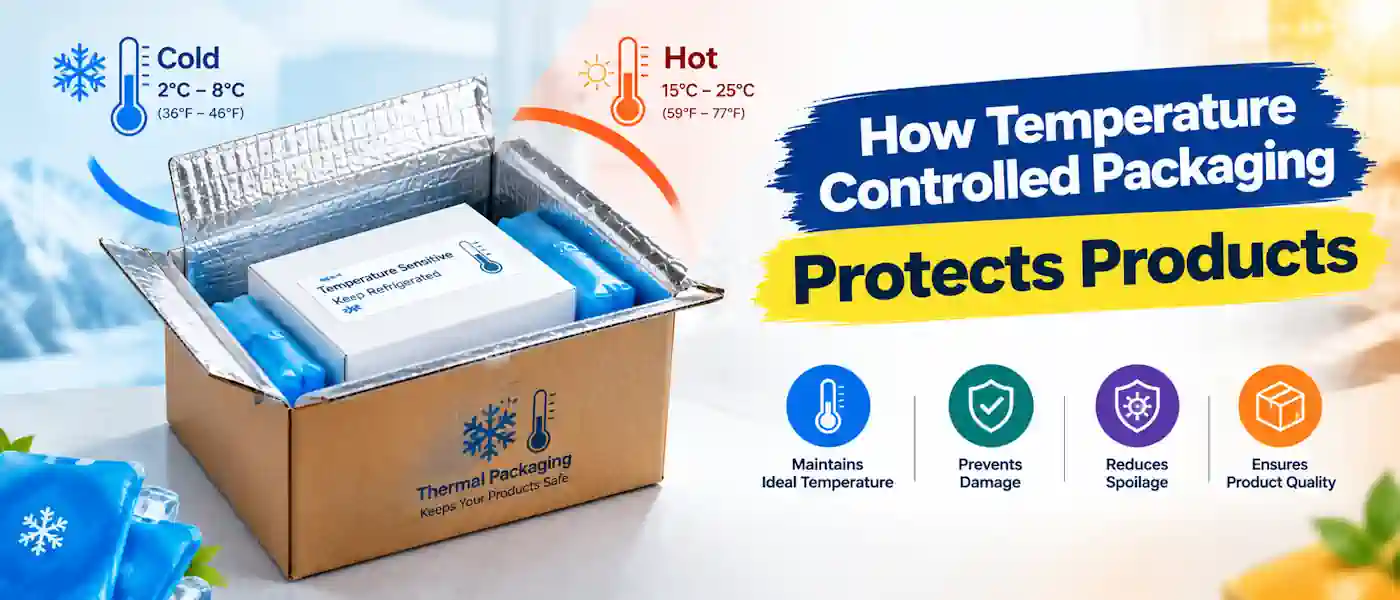
At the heart, this packaging is designed to contain a product in a specific temperature range during the time that it is in transit or sitting in storage. That may be keep something cold, warm or just keep it from going through any crazy temperature swings in any direction. Using a mix of insulation, thermal materials, and occasionally active cooling or heating elements, it forms a stable internal environment, no matter what is happening outside of the container. None of this is available from a standard corrugated cardboard shipper. It is particularly designed for temperature controlled packaging.
Industries that depend on it heavily include:
- Pharmaceuticals and vaccines
- Fresh produce and seafood
- Frozen foods
- Dairy and other perishables
- Cosmetics and skincare
- Lab specimens and diagnostic samples
- Certain chemicals
- Cut flowers and live plants
Why This Matters More Than People Assume
For many goods, a temperature excursion is more than a slight inconvenience, it’s a loss of the entire batch. Drugs can lose potency. Food can spoil, and get people sick. Chemical breakdown can occur in cosmetic formulations. None of that can be undone once it’s happened.
There is also the burden of regulatory compliance beyond just the direct product loss. Pharmaceutical and food shipments, in particular, are subject to stringent handling regulations, with non compliance bringing fines, recalls, or lost contracts. Also, customers who end up with a rotten or otherwise degraded product seldom give a brand a second chance. As well as protecting the product, getting the packaging right protects the company’s reputation and its profits all at once.
Passive vs. Active Temperature Control
There are two main types of temperature controlled packaging, and which one is appropriate depends on the duration of the shipment, sensitivity of the product, and available budget.
Passive Systems
Passive packaging does not plug in or run on batteries. It uses insulation as well as materials that have been pre-chilled or pre-heated to keep the interior temperature within a range for a specific time period.Standard FEATURES:Ethernet Port2 RS-232 (TX/RX – Half Duplex) PortsCommon components include:
- Gel packs
- Dry ice
- Standard ice packs
- Thermal liners
- Insulated foam inserts
These systems are lightweight, inexpensive, and can maintain a consistent temperature for anywhere from a few hours to several days, depending on their design. They are the preferred solution for the majority of short and medium length shipments.
Active Systems
Active systems use powered heating or cooling to maintain a precise, consistent temperature over much longer periods.Examples include:
- Refrigerated shipping containers
- Battery-powered cooling units
- Electrically regulated shipping boxes
- Heated transport containers
These cost more and require more logistical planning, but they’re worth it for long-haul shipments or high-value products where even a small temperature deviation is unacceptable.
Common Types of Insulated Shipping Boxes
Once you know your ship frequency and ship content, you have a few options among packaging formats that work best for these scenarios.
Insulated Corrugated Boxes Standard corrugated cardboard fitted with a foam or thermal liner. Affordable and effective for routine shipments that don’t need extreme protection.
Reusable Insulated Containers Built to be shipped back and reused multiple times, which cuts down on both packaging costs and waste over time. Popular with meal kit companies and recurring pharmaceutical shipments.
Vacuum Insulated Panel (VIP) Boxes Extremely thin but highly effective insulation, often used for high-value biologics and specialty medical products where space is limited but thermal performance can’t be compromised.
How Pharmaceutical Companies Approach This
There are few industries as obsessed with temperature control as pharma, and with good reason: A temp-sensitive drug mishandled even once can mean thousands of dollars in lost inventory, or even a patient getting a compromised product.
Pharmaceutical shippers typically combine several tools in one shipment:
- High-performance insulated containers
- Gel packs or dry ice depending on the required range
- Vacuum insulated panels for especially sensitive products
- Digital data loggers that record temperature throughout the journey
- Tamper-evident seals to confirm the package wasn’t opened en route
That data logger is worth a shout out on its own. This provides companies with evidence of the precise temperature a shipment encountered, from pickup to delivery, which is important for quality control as well as regulator compliance.
The Real Benefits, Beyond Just “Keeping Things Cold”
It protects product integrity. Freshness, potency, and stability all stay intact when temperature stays within range.
It cuts down on waste and financial loss. Spoiled inventory is money thrown away, and reshipping a replacement costs even more.
It keeps businesses compliant. Food and pharmaceutical regulations often specify exact handling and storage requirements, and proper packaging is how companies meet them.
It reduces customer complaints and returns. A product that arrives in the condition it’s supposed to means fewer support tickets, fewer refunds, and better reviews.
What to Consider Before Choosing a Solution
The choice of packaging is not a one-size-fits-all decision.A few things should influence the decision:
- Required temperature range: know exactly what window your product needs to stay within before shopping for materials.
- Shipping duration: longer transit times call for stronger insulation and more cooling capacity.
- Expected environmental conditions: a summer shipment through a hot climate needs far more protection than a winter delivery across a short distance.
- Box sizing: an oversized box wastes insulation efficiency and requires more cooling material than necessary; a properly sized one performs better and costs less.
Sustainability Is Reshaping This Industry
Thermal insulating packaging traditionally relies on materials that are not environmentally friendly, such as foam inserts, and gel packs that are not recyclable. But that’s changing quickly.Newer options on the market include:
- Recyclable insulated liners
- Paper-based thermal packaging
- Biodegradable cooling gels
- Reusable shipping containers designed for return cycles
- Reduced-plastic insulation alternatives
They enable companies to meet sustainability goals without compromising on the thermal performance their products rely on.
Practical Tips for Better Results
These are just a few of the things that differentiate organizations that deliver reliably from those that have to contend with constant spoilage reports:
- Fully pre-chill or pre-heat cooling agents before packing them in.
- Match insulation strength to the actual length of the shipment, not a rough guess.
- Fill empty space inside the box; air gaps let temperature shift faster.
- Seal every box tightly and consistently.
- Add a temperature monitor to high-value or high-risk shipments.
- Run real-world test shipments before scaling up a new packaging solution.
- Stick to the storage and handling instructions specific to the product.
None of these steps are difficult, but omitting any one of them can negate the effect of an otherwise well-designed treatment package.
Where This Is Headed
Temperature controlled packaging is thus becoming more core to how the supply chain operates as more industries ship perishable, fragile, or regulated products over greater distances. The combination of more intelligent monitoring solutions and more sustainable materials is allowing companies to have their cake and eat it too—protecting their products and lessening their impact on the environment. It’s nailing the packaging — from the insulation type, to carton sizing, to monitoring — that keeps sensitive products safe from the warehouse to the customer’s door.